Content Warning: Death. Medical details. Cancer. Woe.
Your guts live inside a sort of bag in your abdomen. This bag is called the omentum, and the idea is to keep everything snug and safe, and together. If anything should rupture within your abdomen, through cancer, or infection, or ulceration, this bag has to be opened up, emptied and cleaned if you are to have any chance of survival. When Mum's bowel burst, that's what they did to save her. As you can imagine, sometimes you miss a bit, and this also happened to Mum. This tiny missed bit grew into an abscess right on her liver. The cancer had so convoluted Mum's insides that attempting to operate again would have been enormously complicated and probably hastened her end, thus being a massive waste of money and quality of life. So, instead, they decided to stick a drain in it.
They stuck it in one lunchtime. You cannot imagine the smell, the miasma it created. Just the tiniest drop of pus would stink out a whole sheet. It really upset Mum. She was a very clean person, obsessed with food hygiene and the fact that molecules that could be smelled could be inhaled. The intention was to remove the tube, but this was impossible because first the infection kept filling back up, and second it was in a tumour. So, the tube stayed in and she had a 600ml capacity bag strapped to her leg. When it first went on, it fit perfectly. By the time she died, it flapped around and didn't fit to her leg at all. It was a very visual reminder of how much weight she had lost and how quickly.
She was terribly distressed about the smell, and the next morning, I was wracking my brains about what I could do for her to make her feel less violated. I found some travel Molton Brown bath gels and I took them into hospital, and bought some flannels. She couldn't have a bath or a shower with the drain in, so she chose the one she liked best and I put it on a flannel for her to smell instead of the drain. She liked White Sandalwood the best.
I had a travel sized pot of the white sandalwood moisturiser at home, so I took it round once she was home, and I spent a long time putting it on her. I'm not sure whether it was because she was chronically dehydrated, or the liver failure, or the immobility, but her skin cracked really badly and she hated it. The moisturiser helped a little bit. I ended up buying her a massive canister of the stuff as a reward for being so brave. As an early Christmas present. As an attempt to make her smile.
And so I spent the rest of her life gently stroking her with moisturiser, trying to restore some life to her dying skin, trying to keep in contact with her because I was afraid. I recall me, Jess and Sooz ALL moisturising her at once on occasion. She loved to be touched. She had trained as a massage and aromatherapist when I was young, and she had such an art when she gave you a massage. Jess has the same gift, but I do not. But I tried. And I'm not usually very physical, but I wanted to do something.
But as time went on, her skin became unbearably fragile and painful. I hurt her by accident so many times, because I got the pressure wrong. She would snap sometimes; she wanted us with her but she wanted to be alone. She sat in the garden, covered in fleeces, reading magazines, chainsmoking, and we would sit by her and try to read too, but not really taking in the words. I would try to stroke away the sloughing of her skin, the chafing of her frustration - only very occasionally expressed - and try to make her feel normal again.
After a while, she lost the feeling in her skin. We could touch her properly again, although I don't know if she could feel it. Dad could move her more easily. Whenever I was with her, when she couldn't have a conversation, which was most of the time, I reflexively reached for the moisturiser. I brushed her hair. I did the same things I do for my babies when they are poorly. I tried to show her how much I love her.
And now I will never ever be able to smell white sandalwood moisturiser again without smelling the bag of toxicity hanging from my mother's leg. Without smelling the hint of cigarette smoke that surrounded her right up to 48hrs before she died. Without feeling the cracked skin under my hands, desperately trying to rehydrate her by willpower alone. Without recalling the desperate urge to somehow stave off her death.
Which is a shame, because it was my favourite too.
23 Jan 2017

13 Jan 2017
Me? Doing a Masters?
I think it's a fair shout to say I haven't had the best start to doing my MA.
I signed up on July 27th. On July 29th, my mum became critically ill. I debated whether to defer for a year. I debated whether to do it at all. The more I read about the course, the more I wanted to do it.
I've been interested in social history for ever. I've spent the last year working on family trees for me and my friends, and become intrigued by family structure particularly in rural areas. I've got a talent for creating narratives from primary evidence, for constructing strong arguments, for finding links that aren't immediate obvious and for holding vast stores of intricate genealogy in my head. Local history extends this into the landscape - who lived where? Why did they live there? What did they do? What did they earn? How were they linked? How does this compare to other areas? It's a natural step up from family research and it appeals to my soul.
Then there's my mum. Mum loved social history. She was fascinated by the rise of leisure time in the Victorian era, and the link to the railway network and how resorts were created to supply demand. Having experienced the stigma of being a single mother in the sticks, illegitimacy interested her. Coming from a big family, and having one herself, she read about other big families. She encouraged me. We would talk about history more than almost anything, monologuing at each other on the phone for hours. When I did the preliminary tests for getting on the MA, one of the questions was on the rise of Blackpool. Mum was a bubbling torrent of information on it when I told her. I am devastated that she's not here to talk to about it all anymore. She didn't want me to do the MA when I first discussed it with her, way back in June. She thought I should go directly into writing (my eventual aim) so she could read it. But I didn't feel qualified to write about it without a single history qualification to my name.
So, I decided to do it anyway. My start date was 1st October, by which point my mum was nearing her end. I worked hard but sparingly. It is terribly difficult to focus when the person you need most is dying. You think about little else. You worry. You want to be with them. You don't particularly want to be reading about tiny Highland communities in 1780. Or doing anything really. It's hard. But I did it.
Then she died. She died and I had a deadline. I postponed the deadline, but I still knew it was coming. Everything I had studied before fell to fog. And since she died, every time I read something she would have loved to know about, I feel a stab. It's not fair.
So I wrote my essay. I struggled a bit, just to get my thoughts in order (complicated by having a general anaesthetic a few days before) and then to write it, to use a whole new system of referencing, and to write about something I've not really done before. There is a lot of crossover between modern history and sociology, but they require different styles, and the essay was theoretical. I got it in. I got 63%, which is far more than I hoped for. It was not easy to write, but I found my style and voice much faster than I ever have before.
Now I'm looking to my next essay, getting to grips with the vast amount of potential literature on offer, and having to decide for myself what is and isn't relevant. Before I began this, some mansplaining dick told me that there was 'lots of reading' involved in an MA. I was pissed off because...well duh, but it's the quality of reading that counts. History perhaps generates the most written material of any subject, and some of it is diabolical quality, and some of it is absolutely essential, and some of it is absolutely essentially and like wading through treacle. And you have to decide what's good. I am currently sitting with no less than six relevant books, another two on the laptop to work through, countless potential journal articles that might be useful. I might only use one paragraph from each book, but I need to find it. Your undergrad is SPOON-FED to you in comparison to this.
And I daresay for those who go on to do a PhD, a masters is equally spoon-fed.
I love writing history. I love writing, full stop, but history is a particular pleasure. Telling the story of people who lived long ago, who never hoped to be historically relevant, who did nothing to immortalise themselves. That's a privilege. Finding their stories, hidden in the records, and understanding their context. That's my favourite thing. Reading ancient newspapers is much better for the soul than reading facebook. I don't know if I can actually making a living doing this - probably not, the world is awash with historians and you have to be pretty fucking ace to get published - but even if I can't, I will try. I will try for my mum. I will try for myself.
I signed up on July 27th. On July 29th, my mum became critically ill. I debated whether to defer for a year. I debated whether to do it at all. The more I read about the course, the more I wanted to do it.
I've been interested in social history for ever. I've spent the last year working on family trees for me and my friends, and become intrigued by family structure particularly in rural areas. I've got a talent for creating narratives from primary evidence, for constructing strong arguments, for finding links that aren't immediate obvious and for holding vast stores of intricate genealogy in my head. Local history extends this into the landscape - who lived where? Why did they live there? What did they do? What did they earn? How were they linked? How does this compare to other areas? It's a natural step up from family research and it appeals to my soul.
Then there's my mum. Mum loved social history. She was fascinated by the rise of leisure time in the Victorian era, and the link to the railway network and how resorts were created to supply demand. Having experienced the stigma of being a single mother in the sticks, illegitimacy interested her. Coming from a big family, and having one herself, she read about other big families. She encouraged me. We would talk about history more than almost anything, monologuing at each other on the phone for hours. When I did the preliminary tests for getting on the MA, one of the questions was on the rise of Blackpool. Mum was a bubbling torrent of information on it when I told her. I am devastated that she's not here to talk to about it all anymore. She didn't want me to do the MA when I first discussed it with her, way back in June. She thought I should go directly into writing (my eventual aim) so she could read it. But I didn't feel qualified to write about it without a single history qualification to my name.
So, I decided to do it anyway. My start date was 1st October, by which point my mum was nearing her end. I worked hard but sparingly. It is terribly difficult to focus when the person you need most is dying. You think about little else. You worry. You want to be with them. You don't particularly want to be reading about tiny Highland communities in 1780. Or doing anything really. It's hard. But I did it.
Then she died. She died and I had a deadline. I postponed the deadline, but I still knew it was coming. Everything I had studied before fell to fog. And since she died, every time I read something she would have loved to know about, I feel a stab. It's not fair.
So I wrote my essay. I struggled a bit, just to get my thoughts in order (complicated by having a general anaesthetic a few days before) and then to write it, to use a whole new system of referencing, and to write about something I've not really done before. There is a lot of crossover between modern history and sociology, but they require different styles, and the essay was theoretical. I got it in. I got 63%, which is far more than I hoped for. It was not easy to write, but I found my style and voice much faster than I ever have before.
Now I'm looking to my next essay, getting to grips with the vast amount of potential literature on offer, and having to decide for myself what is and isn't relevant. Before I began this, some mansplaining dick told me that there was 'lots of reading' involved in an MA. I was pissed off because...well duh, but it's the quality of reading that counts. History perhaps generates the most written material of any subject, and some of it is diabolical quality, and some of it is absolutely essential, and some of it is absolutely essentially and like wading through treacle. And you have to decide what's good. I am currently sitting with no less than six relevant books, another two on the laptop to work through, countless potential journal articles that might be useful. I might only use one paragraph from each book, but I need to find it. Your undergrad is SPOON-FED to you in comparison to this.
And I daresay for those who go on to do a PhD, a masters is equally spoon-fed.
I love writing history. I love writing, full stop, but history is a particular pleasure. Telling the story of people who lived long ago, who never hoped to be historically relevant, who did nothing to immortalise themselves. That's a privilege. Finding their stories, hidden in the records, and understanding their context. That's my favourite thing. Reading ancient newspapers is much better for the soul than reading facebook. I don't know if I can actually making a living doing this - probably not, the world is awash with historians and you have to be pretty fucking ace to get published - but even if I can't, I will try. I will try for my mum. I will try for myself.
18 Dec 2016
Fascism
Yes, I said it. Fascism. Not the alt-right. What the fuck does that mean? The alternative to what? It's not an alternative to standard conservative right-wing politics, it is going further than it. It is fascism. I wish we could ctrl-alt-del that term out of existence. People dislike the term fascism, you see. For some reason, can't think why, it reminds people of Hitler, and no political movement likes to be associated with Hitler even when he should be their idol. Hitler is so internationally reviled across the West that identifying with him is a bit of a faux pas. So, they call themselves the alt-right, and they act all affronted when you call them fascists, or snerk about Godwin's Law, and somehow they go on.
The greatest divisions in society are religion, ethnicity, and perhaps most importantly, class. Everyone likes to think they are a slightly higher class than they are, to give them a comfortable feeling of superiority. This can manifest in many different ways - from doing the odd shop at Marks and Spencer, to trying to get children into the better schools, to judging single parents, to generally hating immigrant workers. Fascism loves it. Fascism wants everyone in their place, and holds a hand out to the aggrieved and lacking in social mobility, and it says "This is all their fault". They can be the poor, the sick, the foreign, those of different faith. This is what Hitler excelled at - he told Germany that it's severe economic distress was not caused by poor government and war reparations, but by Jews, disabled people and gypsies. Switch out Jews for Muslims and gypsies for Eastern Europeans, and doesn't that sound familiar to UKIP and others rhetoric?
We have struggled economically as a nation since the banking collapses of 2009 onward, although our economy is one of the strongest in the world. We bailed out the foolish banks with public money. Ever since, we have been suffering under austerity budgets that cut and cut and cut. It is not the rich who particularly feel the brunt of this, because they are protected both by status and wealth. It is the Average Joe. It is you. It is me.
The NHS, an institution founded on socialism and the need to reward a ravaged nation with security, has been cut and cut and cut since the banking collapse. The Conservative government are destroying it, on purpose, because it is absolutely contrary to their ideology. But the news stories are about requiring passports at point of treatment to prevent health tourism. The people believe that the NHS is failing because of overdemand, not underbudgeting. The people believe that it is immigrants taking the NHS away, not a concentrated effort by the incumbent government to rid themselves of an outdated, unwieldy and expensive edifice. And 'the people' buy into this, because they aren't immigrants. They might go to the doctors every time they have a sniffle. They might have four months worth of unused medication in a cupboard for a rainy day. They might go to A+E after yet another punch up on a Friday night. But it's those damn immigrants ruining the NHS.
By the same logic, that idiot woman on Question Time who voted Conservative and was shocked when her benefits were cut. Surely only OTHER PEOPLE will suffer from cuts? The undeserving poor? The foreign? Not...normal people? Not, to quote the government's favourite phrase, hardworking people? Our government has no issue with insidiously implicating that the Others are to blame for all its problems, be they the chronically sick, the chronically underemployed. Muslims, immigrants or refugees.
And so fascism extends its greasy paw across Europe and the USA, promising results where centrist governments have not been seen as a success. Fascism promises that the immigrants and the Muslims will be dealt with, and the common man will rise again, and our country will be great again. Doesn't matter which country, they all promise the same thing: Take Our Country Back. Make America Great Again. Au Nom Du Peuple. Österreich Zuerst. Ein Reich, Ein Volk, Ein Führer.
But we only have to look at the example of 1930s Germany and Italy to know what happens when Fascists are democratically elected. Democracy goes down the pan. The poor stay poor. The rich stay rich. Civil rights are eroded or dispensed with altogether. Immigrants 'disappear', but this does not magically improve working lives. Religious dissent is not tolerated, regardless of what religion is adopted nationally. The only way out of poverty is through military service. Class is not eradicated, but entrenched even further. There is no social mobility.
It vexes me when the lower social classes adopt fascism as a cause. I can understand it among the wealthy - after all, fascism was very popular in Britain prior to the outbreak of World War II, primarily because the rich missed their servants and didn't like all these upstarts being independent. But the lower social classes, and that's the majority of my readership, are deluding themselves if they think that going further right will benefit them in the slightest. Balls to the alt-right. Balls to fascism. Recognise it. Shun it.
The greatest divisions in society are religion, ethnicity, and perhaps most importantly, class. Everyone likes to think they are a slightly higher class than they are, to give them a comfortable feeling of superiority. This can manifest in many different ways - from doing the odd shop at Marks and Spencer, to trying to get children into the better schools, to judging single parents, to generally hating immigrant workers. Fascism loves it. Fascism wants everyone in their place, and holds a hand out to the aggrieved and lacking in social mobility, and it says "This is all their fault". They can be the poor, the sick, the foreign, those of different faith. This is what Hitler excelled at - he told Germany that it's severe economic distress was not caused by poor government and war reparations, but by Jews, disabled people and gypsies. Switch out Jews for Muslims and gypsies for Eastern Europeans, and doesn't that sound familiar to UKIP and others rhetoric?
We have struggled economically as a nation since the banking collapses of 2009 onward, although our economy is one of the strongest in the world. We bailed out the foolish banks with public money. Ever since, we have been suffering under austerity budgets that cut and cut and cut. It is not the rich who particularly feel the brunt of this, because they are protected both by status and wealth. It is the Average Joe. It is you. It is me.
The NHS, an institution founded on socialism and the need to reward a ravaged nation with security, has been cut and cut and cut since the banking collapse. The Conservative government are destroying it, on purpose, because it is absolutely contrary to their ideology. But the news stories are about requiring passports at point of treatment to prevent health tourism. The people believe that the NHS is failing because of overdemand, not underbudgeting. The people believe that it is immigrants taking the NHS away, not a concentrated effort by the incumbent government to rid themselves of an outdated, unwieldy and expensive edifice. And 'the people' buy into this, because they aren't immigrants. They might go to the doctors every time they have a sniffle. They might have four months worth of unused medication in a cupboard for a rainy day. They might go to A+E after yet another punch up on a Friday night. But it's those damn immigrants ruining the NHS.
By the same logic, that idiot woman on Question Time who voted Conservative and was shocked when her benefits were cut. Surely only OTHER PEOPLE will suffer from cuts? The undeserving poor? The foreign? Not...normal people? Not, to quote the government's favourite phrase, hardworking people? Our government has no issue with insidiously implicating that the Others are to blame for all its problems, be they the chronically sick, the chronically underemployed. Muslims, immigrants or refugees.
And so fascism extends its greasy paw across Europe and the USA, promising results where centrist governments have not been seen as a success. Fascism promises that the immigrants and the Muslims will be dealt with, and the common man will rise again, and our country will be great again. Doesn't matter which country, they all promise the same thing: Take Our Country Back. Make America Great Again. Au Nom Du Peuple. Österreich Zuerst. Ein Reich, Ein Volk, Ein Führer.
But we only have to look at the example of 1930s Germany and Italy to know what happens when Fascists are democratically elected. Democracy goes down the pan. The poor stay poor. The rich stay rich. Civil rights are eroded or dispensed with altogether. Immigrants 'disappear', but this does not magically improve working lives. Religious dissent is not tolerated, regardless of what religion is adopted nationally. The only way out of poverty is through military service. Class is not eradicated, but entrenched even further. There is no social mobility.
It vexes me when the lower social classes adopt fascism as a cause. I can understand it among the wealthy - after all, fascism was very popular in Britain prior to the outbreak of World War II, primarily because the rich missed their servants and didn't like all these upstarts being independent. But the lower social classes, and that's the majority of my readership, are deluding themselves if they think that going further right will benefit them in the slightest. Balls to the alt-right. Balls to fascism. Recognise it. Shun it.
16 Nov 2016
Funeral Blues
We said goodbye to Mum on a bright, clear day, at a church approaching its 900th year. Religious or not, there is a great comfort in waiting in a churchyard, knowing that this little ritual goes back centuries, knowing you aren't the first. Her coffin was bedecked in purple and red, a gift from my dad. Usually in church, we sat together towards the back with Mum in the centre, frowning at any giggles escaping, occasionally giving a stern 'church pinch' to restore order among the brood. But this time, she was at the front. And everyone who spoke spoke of her. Her faith. Her love. Her generosity. Her selfless spirit. Her hospitality.
I still can't find a way to talk about my mum, to bring my mum to life. I cannot draw with words her intricacies, her humour, her smile, her goodness, her love, because I don't think there are enough words.The words haven't been invented yet.
Afterwards, at the wake, we drank and laughed and exchanged stories and my mum would have loved it. She would have bought herself a small glass of red and got my dad to top it up out of a box in the car. She would have circulated through all her many relatives. She would have sneered slightly at the buffet, then told anyone and everyone present that she could have done it much better for half the price (and she could have done).
I think we did her proud. We did what she wanted. If she could have been there herself to check it all went off OK, she would have been. I think perhaps she was anyway. I felt her so strongly before we left the house to go to the funeral, I was just waiting for her to come in from having a cigarette and brush the fluff from Dad's collar. There, but not there.
And now there is a great period of adjustment. I have not cried for my mum. I feel like if I begin, I will never stop. Instead, I grieve piecemeal, always with one eye on the calendar. It has been three weeks since I last saw my mum alive, and two weeks and six days since I last saw her. It has been one month since I last spoke to my mum on the phone. It has been 36 days since she was last able to text me. It has been two months since I last cuddled her properly. It has been three months and three days since she was discharged from hospital. It has been three and a half months since she was first admitted. I can't yet mourn my mummy because I have not yet assimilated the shock and the pain of these three and a half months. We had our son christened, and my mum was pale and thin but herself, still catering, still gossiping, still socialising. And six days later, everything that was possible to change had changed.
This is something the vicar read at Mum's funeral, one of the things that Mum did not plan. I love it because my mum loved the sea, and the idea of her being just out of sight, just out of reach resonates with me more than anything. I can feel her with me, I just can't be with her yet. But one day, I will be.
I am standing upon the seashore. A ship, at my side, spreads her white sails to the moving breeze and starts for the blue ocean. She is an object of beauty and strength. I stand and watch her until, at length, she hangs like a speck of white cloud just where the sea and sky come to mingle with each other.
Then, someone at my side says, "There, she is gone."
Gone where?
Gone from my sight. That is all. She is just as large in mast, hull and spar as she was when she left my side. And, she is just as able to bear her load of living freight to her destined port. Her diminished size is in me -- not in her.
And, just at the moment when someone says, "There, she is gone,"
there are other eyes watching her coming, and other voices ready to take up the glad shout, "Here she comes!"
And that is dying...
(wrongly attributed to Victor Hugo)
I still can't find a way to talk about my mum, to bring my mum to life. I cannot draw with words her intricacies, her humour, her smile, her goodness, her love, because I don't think there are enough words.The words haven't been invented yet.
Afterwards, at the wake, we drank and laughed and exchanged stories and my mum would have loved it. She would have bought herself a small glass of red and got my dad to top it up out of a box in the car. She would have circulated through all her many relatives. She would have sneered slightly at the buffet, then told anyone and everyone present that she could have done it much better for half the price (and she could have done).
I think we did her proud. We did what she wanted. If she could have been there herself to check it all went off OK, she would have been. I think perhaps she was anyway. I felt her so strongly before we left the house to go to the funeral, I was just waiting for her to come in from having a cigarette and brush the fluff from Dad's collar. There, but not there.
And now there is a great period of adjustment. I have not cried for my mum. I feel like if I begin, I will never stop. Instead, I grieve piecemeal, always with one eye on the calendar. It has been three weeks since I last saw my mum alive, and two weeks and six days since I last saw her. It has been one month since I last spoke to my mum on the phone. It has been 36 days since she was last able to text me. It has been two months since I last cuddled her properly. It has been three months and three days since she was discharged from hospital. It has been three and a half months since she was first admitted. I can't yet mourn my mummy because I have not yet assimilated the shock and the pain of these three and a half months. We had our son christened, and my mum was pale and thin but herself, still catering, still gossiping, still socialising. And six days later, everything that was possible to change had changed.
This is something the vicar read at Mum's funeral, one of the things that Mum did not plan. I love it because my mum loved the sea, and the idea of her being just out of sight, just out of reach resonates with me more than anything. I can feel her with me, I just can't be with her yet. But one day, I will be.
I am standing upon the seashore. A ship, at my side, spreads her white sails to the moving breeze and starts for the blue ocean. She is an object of beauty and strength. I stand and watch her until, at length, she hangs like a speck of white cloud just where the sea and sky come to mingle with each other.
Then, someone at my side says, "There, she is gone."
Gone where?
Gone from my sight. That is all. She is just as large in mast, hull and spar as she was when she left my side. And, she is just as able to bear her load of living freight to her destined port. Her diminished size is in me -- not in her.
And, just at the moment when someone says, "There, she is gone,"
there are other eyes watching her coming, and other voices ready to take up the glad shout, "Here she comes!"
And that is dying...
(wrongly attributed to Victor Hugo)
3 Nov 2016
Grief
When someone you love perhaps most in the world dies, people don't know what to say. What can you say? It's in our nature, at least generally, to comfort the lost and the sick. Grief is a loss. Grief makes you sick. Grief is like having a terrible illness that requires long convalescence to heal and after which, you can never be the same. Grief is intangible and yet so intensely physical.
Until you experience it yourself, which you will because that is the order of things, you cannot hope to know quite what it feels like. I am aggravated by people telling me how I must be feeling. I resent every text and message on some level, because it intrudes, because it reminds, because of the fallacies and clichés. And yet, I value and crave the acknowledgement.
She is dead. She is dead. I am hurting. Can't you see my pain? Can't you feel it coming off me in waves? Can't you feel my grief?
I felt a great vast expanse open in my chest, and stay there, throbbing and empty. And it throbs on. I have to come to terms with so much, we all do, and my ability to write my feelings doesn't change the experience. But I must write. We are together in grief, but our loss is unique and grief is peculiarly personal. The only way I can make sense of it is words, because nothing feels right anymore. Like a hat on askew, like socks that wrinkle at the ankle and are too tight in the toes. Every single action feels wrong in some odd, small way. And then the sledgehammer again, through me. I've only cried once. It is unfathomable.
We had three months to get used to the idea, and when you are caring for and about someone in terminal illness, time loses meaning. A week is a year, a day is a minute. Three months seemed like a thousand years and nothing. I had a mum and then I didn't. I had a healthy-ish mum who did things like go to work and cook food and who spent hours on the phone telling me she had to go in a minute, and who cuddled and smelled of Chanel and red wine and cigarettes and Mum. Then three months of limbo, of watching her decline and knowing there would be no cure and taking a strange solace in the absence of hope. And then she was gone, pinched out like a candle. In a heartbeat, I had no mummy.
This is me and Mum in early August, when she was still in Scarborough hospital. We were messing about, doing pictures for her "MY BOWEL BURST IN BRID! HOLIDAY HORROR!" Take A Break spoof. I had a mock up made and sent it to her and it made her cry laughing. She had the best sense of humour. That was the day I realised I had hardly any photos of us together. And after a few weeks, I stopped taking photos. I hadn't before because I thought we had an eternity together and then I didn't because I couldn't bear a record of the changes to her appearance, which reflected the changes to her insides.

I viewed the changes to my mum through a medical lens, because of the cognitive dissonance in seeing what was happening without understanding why. I envy those who didn't need to. I watched her for the signs of jaundice, I took her pulse, I stared at her monitors in hospital like a hawk, I read her blood results, I read her hospital letters, I watched her having medical procedures done, I looked at her ultrasound, I asked doctors what was happening, I checked her reflexes when nobody was looking, I checked her output, I learned about her medications, I tried not to be doomy but I couldn't bear the false hope of optimism.
I held her hand. I told her I loved her. I told her what things meant. I tried to take the fear out of it. I tried to advocate. I was blunt with her when she needed it. I translated. I told her when to look away, and when it was safe to look. I held her sick bucket. I gave her drinks. I stroked her hair. I put cream on her. I tried not to hurt her.
I saw her at least every three days. Before she got ill, I would go weeks without seeing her and not really mind too much because I knew she'd still be there when we caught back up.
There is peace in the darkness. There is peace knowing that she is quiet now. There is peace knowing she can't hurt now. There is peace in hoping she has gone on. There is peace in the pain of loss.
But nothing is right anymore, and it will take time to grow used to her absence. Mum had a presence like no other. She was all scent and hair and love and chat and humour. You always knew she was there. I don't know where she is now. That is the loss they speak of. Where did she go?
My sister said we will miss her every day of our lives. She is right. It is the endlessness of grief that outfaces me. When I am 88, I will miss her. I will wonder what she would think of things. I will wish I had her to ground me. I will miss her every day.
Until you experience it yourself, which you will because that is the order of things, you cannot hope to know quite what it feels like. I am aggravated by people telling me how I must be feeling. I resent every text and message on some level, because it intrudes, because it reminds, because of the fallacies and clichés. And yet, I value and crave the acknowledgement.
She is dead. She is dead. I am hurting. Can't you see my pain? Can't you feel it coming off me in waves? Can't you feel my grief?
I felt a great vast expanse open in my chest, and stay there, throbbing and empty. And it throbs on. I have to come to terms with so much, we all do, and my ability to write my feelings doesn't change the experience. But I must write. We are together in grief, but our loss is unique and grief is peculiarly personal. The only way I can make sense of it is words, because nothing feels right anymore. Like a hat on askew, like socks that wrinkle at the ankle and are too tight in the toes. Every single action feels wrong in some odd, small way. And then the sledgehammer again, through me. I've only cried once. It is unfathomable.
We had three months to get used to the idea, and when you are caring for and about someone in terminal illness, time loses meaning. A week is a year, a day is a minute. Three months seemed like a thousand years and nothing. I had a mum and then I didn't. I had a healthy-ish mum who did things like go to work and cook food and who spent hours on the phone telling me she had to go in a minute, and who cuddled and smelled of Chanel and red wine and cigarettes and Mum. Then three months of limbo, of watching her decline and knowing there would be no cure and taking a strange solace in the absence of hope. And then she was gone, pinched out like a candle. In a heartbeat, I had no mummy.
This is me and Mum in early August, when she was still in Scarborough hospital. We were messing about, doing pictures for her "MY BOWEL BURST IN BRID! HOLIDAY HORROR!" Take A Break spoof. I had a mock up made and sent it to her and it made her cry laughing. She had the best sense of humour. That was the day I realised I had hardly any photos of us together. And after a few weeks, I stopped taking photos. I hadn't before because I thought we had an eternity together and then I didn't because I couldn't bear a record of the changes to her appearance, which reflected the changes to her insides.

I viewed the changes to my mum through a medical lens, because of the cognitive dissonance in seeing what was happening without understanding why. I envy those who didn't need to. I watched her for the signs of jaundice, I took her pulse, I stared at her monitors in hospital like a hawk, I read her blood results, I read her hospital letters, I watched her having medical procedures done, I looked at her ultrasound, I asked doctors what was happening, I checked her reflexes when nobody was looking, I checked her output, I learned about her medications, I tried not to be doomy but I couldn't bear the false hope of optimism.
I held her hand. I told her I loved her. I told her what things meant. I tried to take the fear out of it. I tried to advocate. I was blunt with her when she needed it. I translated. I told her when to look away, and when it was safe to look. I held her sick bucket. I gave her drinks. I stroked her hair. I put cream on her. I tried not to hurt her.
I saw her at least every three days. Before she got ill, I would go weeks without seeing her and not really mind too much because I knew she'd still be there when we caught back up.
There is peace in the darkness. There is peace knowing that she is quiet now. There is peace knowing she can't hurt now. There is peace in hoping she has gone on. There is peace in the pain of loss.
But nothing is right anymore, and it will take time to grow used to her absence. Mum had a presence like no other. She was all scent and hair and love and chat and humour. You always knew she was there. I don't know where she is now. That is the loss they speak of. Where did she go?
My sister said we will miss her every day of our lives. She is right. It is the endlessness of grief that outfaces me. When I am 88, I will miss her. I will wonder what she would think of things. I will wish I had her to ground me. I will miss her every day.
29 Oct 2016
Our Mummy
Joanne Ruth Hudson
1961 - 2016
Mum died at home on Thursday. She hated it when we called her brave, but she was so brave. She bore her illness with a formidable will. She knew how she wanted her final weeks to play out, and she had the strength and courage to see that through. Mum was not afraid to die.
She kept her sense of humour throughout, from joking about catering her own wake, to giving us massive cheeky winks while barely conscious. She referred to her tumours as her 'woody lumps', and her innards as her evil doughnut. Nothing was beyond laughter.
It was an honour to be able to help care for her, to return some of the love and care she gave us.
I wanted to write about Mum's life, but I can't find the words. Words are not enough. Her life was not one marked out by events, but by a wellspring of love.
She is so beloved of so many. Her six older siblings, particularly her twin brother Nick. Her nineteen (I think) nieces and nephews, and their children and even grandchildren. All her friends. Mum loved to provide, whether it was love or food or a listening ear. She cared about everyone.
She married my dad in 1984, and they were best friends. A perfect fit. Dad has done absolutely everything in his power to look after Mum, for all her life and through to her death. He is a good man, a wonderful husband, a perfect dad. They have been a template for how a marriage should work, something to aspire to.
Mum and Dad, as you know, have raised a great brood of children. We are proud to be her children, proud to be made of the same strong stuff as her. Mum was mighty. I hope we can be half as mighty.
We have to find our way without her now, but together. She raised us to believe in love, and family, and togetherness, and forgiveness and we will honour that.
All your kind messages, your well wishes and your sympathy, all your love, has been gratefully accepted and passed on. Mum loved reading all the messages you sent. Thank you all so much. The sheer outpouring of love proves how special Mum was. I hope I've been able to convey a little bit of her wonder.
We love you Mummy

Mum loved Cromer, and she particularly loved the Cromer lifeboat. At Mum's request, there will be a collection for the RNLI at her funeral. If you would like to donate on her behalf, you can do so here.
18 Oct 2016
Dying
When I was working, we had patients dying all the time. They used to die in threes, or so it seemed, of all manner of causes, at all ages. We had a list of palliative care patients and they usually were on there because they had been issued with a DS1500. A DS1500 is a form that says you will die within a year or six months. It is a death sentence, created by the government to give you fast access to disability funds, and to pension payouts. I had known some of these patients for years. One had had a cancer in the 1980s as a youth, and been left with suppurating radiotherapy burns which still needed dressing three times a week after twenty years.I had seen that patient three times a week, because the appointments coincided with my shifts, for several years when the cancer came back and they were gone in weeks. The weird thing about working in a GP surgery is that you get to know these patients really well, until they are dying and then they drop off the radar. They become restricted to home visits and fasttracked phone requests for medication and dire oncology letters. The terminal rarely visit the GP surgery. In eight years, nobody died there. We had a birth. We had bloody emergencies in the waiting room. But nobody died. One person had a heart attack and died an hour later in A+E but I never saw anyone die in front of me. Death became everyday, something we all sympathised and empathised with, but the nearest I came to the reality of it was the grief stricken relatives in the weeks afterwards. It changed my perspective on what 'old' was, partly because I was but a youth myself, but partly because teenagers were cut down alongside the very elderly. The idea of death occurring in generational order vanished as I saw grieving spouses and parents, young grieving children, grieving grandparents. Grief doesn't give too much thought about how old the dead are, only about what is lost, be that potential or memories or both.
I became obsessed with death, surrounding myself with literature on pathology, interested in the myriad ways the body could fail, and from there, an interest in more generalised anatomy. But I never saw anyone die.
My first experience of dying predates this, of course. My friend Daisy Fuller. She died in 1995. She was ten years old. She was ten days younger than me. She had leukaemia and hers was the first funeral I ever went to. I was in the choir, and the church was packed and we sang. I don't remember what we sang. I don't remember seeing her coffin. I still visit her grave whenever I'm in the area.
Then my baby brother. He would be seventeen now. He was very teeny tiny. We had his coffin the house the night before the funeral, and it was the only time he ever came home. His name was Thomas. We don't forget him. He's buried just across from Daisy.
Then my grandparents. I was sixteen and they died within eight weeks of each other, both of cancer. Grandad went first, suddenly it seemed to me. Granny a little after after what felt like many months of illness, but was barely eight weeks.
There have been so many others since then, those I loved, those I barely knew, those who were kind to me, helping me gather chickens as a panicking teenager and those who gave me lifts to work. But I never saw them die.
It took two months to realise Mum would really die. Two months. I was terrified when she first got ill. One Sunday in June, I went straight to her house from a day out hoping that she wouldn't be as ill as she sounded. Alas, my mum lacks the clinical signs of infection and the only indication she wasn't right was a slightly raised pulse. I thought she would be OK with antibiotics. She got worse. I sent her back to the doctors because she was afraid to take herself. I told the doctors I thought she had a bowel obstruction. They missed the tumours. They sent her home with another pack of augmentin.
And then she went on holiday, and her bowel burst and poisoned her and I still don't know how she survived. My dad rang me and told me her bowel had burst and she was going to surgery and I had faith, faith in medicine, that she would survive and she would be OK and this was horrible but also the best thing because she would be OK. I told my siblings the same. This was unhappy but at the same time, survivable. She was in the best place, and it was unfortunate that the best place was miles away, but she was safe.
Later that night, Dad told me what the surgeon had told him, and I travelled to be with him while they told her. I still had hope. I still thought it would be OK. They can do so much for cancer these days. They can do so much. We went to see her in ICU, and she was so pleased to see us, and me and my dad sat with her while the surgeon told her what he had found. When he said they wouldn't have operated if they had known, I thought my last spark of hope died. I was wrong. Metastatic adenocarcinoma of unknown primary. Multiple metastases. Circulatory shock. She recovered at an astonishing rate, and was able to come back to Peterborough.
The surgeons in Peterborough were optimistic that they would get her fit for chemo, despite Mum saying over and over that she didn't want it. And then they couldn't give it anymore, and I think that was a small relief to Mum because she hates and fears hospitals. When she was first discharged, I felt so absolutely responsible, the way you do when you go home with your firstborn. Responsible for keeping her alive, for keeping her comfortable, for looking after her.
I don't feel like that now. I realised after a particularly bad weekend that, no matter what I did, I would not ever be able to save her. I already knew I couldn't, but knowing objectively that you can't, and accepting it are two totally different things. Mum's like the knight in Monty Python And The Holy Grail, armless and legless but still going. But the reality that I would have to watch her die was slow to come, and hit me with terrifying force. I lost my grip and I fell down a hole for three days, and then I came back up and I felt more at peace.
She's still here. She's STILL HERE. She is still alive, and she can sometimes talk though she sometimes can't, but she can give me a kiss and I can stroke her hair and moisturise her and she is still here. She is still Mummy for a little bit longer. I have stopped expecting her death with every silence, stopped panicking at every text, stopped thinking ahead, stopped trying to save her, stopped thinking it is my responsibility to save her and stopped feeling guilty for Not Doing the thousands of things that would have made no difference.
We don't know when she will die. We have never known when she will die. She has always been certain that she does not want to know. She does not want us to know. She has known too many people given six months who have had years and too many given years who have had weeks. She does not wish to labour under sentence of death. There's a strange feeling of being adrift because Mum no longer goes to hospital. Who is in charge? Does it really matter? She is in charge. She knows what she wants. She is mighty in the face of death. We love her so, so much. We just want to keep her.

She's still here.
I became obsessed with death, surrounding myself with literature on pathology, interested in the myriad ways the body could fail, and from there, an interest in more generalised anatomy. But I never saw anyone die.
My first experience of dying predates this, of course. My friend Daisy Fuller. She died in 1995. She was ten years old. She was ten days younger than me. She had leukaemia and hers was the first funeral I ever went to. I was in the choir, and the church was packed and we sang. I don't remember what we sang. I don't remember seeing her coffin. I still visit her grave whenever I'm in the area.
Then my baby brother. He would be seventeen now. He was very teeny tiny. We had his coffin the house the night before the funeral, and it was the only time he ever came home. His name was Thomas. We don't forget him. He's buried just across from Daisy.
Then my grandparents. I was sixteen and they died within eight weeks of each other, both of cancer. Grandad went first, suddenly it seemed to me. Granny a little after after what felt like many months of illness, but was barely eight weeks.
There have been so many others since then, those I loved, those I barely knew, those who were kind to me, helping me gather chickens as a panicking teenager and those who gave me lifts to work. But I never saw them die.
It took two months to realise Mum would really die. Two months. I was terrified when she first got ill. One Sunday in June, I went straight to her house from a day out hoping that she wouldn't be as ill as she sounded. Alas, my mum lacks the clinical signs of infection and the only indication she wasn't right was a slightly raised pulse. I thought she would be OK with antibiotics. She got worse. I sent her back to the doctors because she was afraid to take herself. I told the doctors I thought she had a bowel obstruction. They missed the tumours. They sent her home with another pack of augmentin.
And then she went on holiday, and her bowel burst and poisoned her and I still don't know how she survived. My dad rang me and told me her bowel had burst and she was going to surgery and I had faith, faith in medicine, that she would survive and she would be OK and this was horrible but also the best thing because she would be OK. I told my siblings the same. This was unhappy but at the same time, survivable. She was in the best place, and it was unfortunate that the best place was miles away, but she was safe.
Later that night, Dad told me what the surgeon had told him, and I travelled to be with him while they told her. I still had hope. I still thought it would be OK. They can do so much for cancer these days. They can do so much. We went to see her in ICU, and she was so pleased to see us, and me and my dad sat with her while the surgeon told her what he had found. When he said they wouldn't have operated if they had known, I thought my last spark of hope died. I was wrong. Metastatic adenocarcinoma of unknown primary. Multiple metastases. Circulatory shock. She recovered at an astonishing rate, and was able to come back to Peterborough.
The surgeons in Peterborough were optimistic that they would get her fit for chemo, despite Mum saying over and over that she didn't want it. And then they couldn't give it anymore, and I think that was a small relief to Mum because she hates and fears hospitals. When she was first discharged, I felt so absolutely responsible, the way you do when you go home with your firstborn. Responsible for keeping her alive, for keeping her comfortable, for looking after her.
I don't feel like that now. I realised after a particularly bad weekend that, no matter what I did, I would not ever be able to save her. I already knew I couldn't, but knowing objectively that you can't, and accepting it are two totally different things. Mum's like the knight in Monty Python And The Holy Grail, armless and legless but still going. But the reality that I would have to watch her die was slow to come, and hit me with terrifying force. I lost my grip and I fell down a hole for three days, and then I came back up and I felt more at peace.
She's still here. She's STILL HERE. She is still alive, and she can sometimes talk though she sometimes can't, but she can give me a kiss and I can stroke her hair and moisturise her and she is still here. She is still Mummy for a little bit longer. I have stopped expecting her death with every silence, stopped panicking at every text, stopped thinking ahead, stopped trying to save her, stopped thinking it is my responsibility to save her and stopped feeling guilty for Not Doing the thousands of things that would have made no difference.
We don't know when she will die. We have never known when she will die. She has always been certain that she does not want to know. She does not want us to know. She has known too many people given six months who have had years and too many given years who have had weeks. She does not wish to labour under sentence of death. There's a strange feeling of being adrift because Mum no longer goes to hospital. Who is in charge? Does it really matter? She is in charge. She knows what she wants. She is mighty in the face of death. We love her so, so much. We just want to keep her.
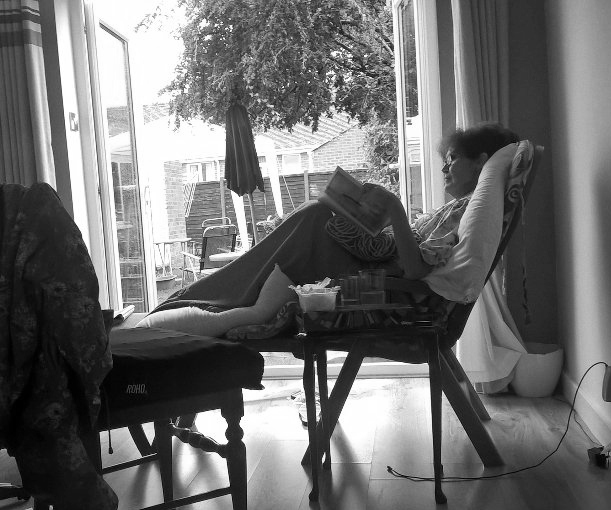
She's still here.
Subscribe to:
Posts (Atom)